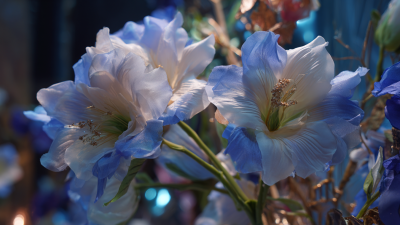
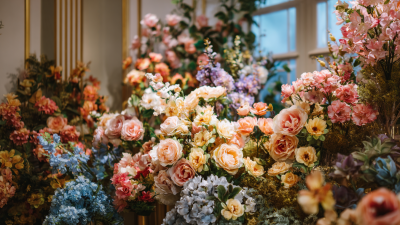
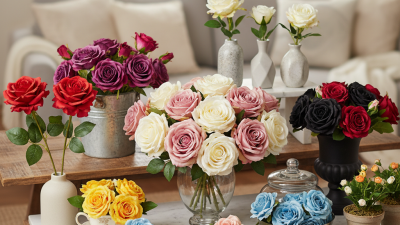
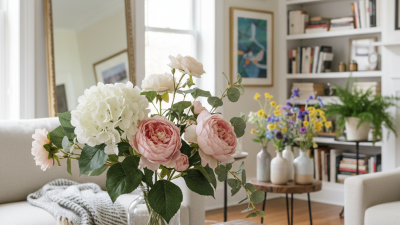
Artificial Flowers Leaves are often grouped together in one decorative category, but they serve different visual and practical purposes. Artificial flowers usually create focal points through color, shape, and seasonal character. Artificial leaves provide structure, background, and a natural-looking frame. In a vase, bright silk roses may attract attention, while broad green leaves fill empty spaces and support the arrangement’s balance. The difference becomes clearer when you examine texture, construction, and placement.
Flowers commonly feature layered petals, detailed centers, and stronger color variation. Leaves usually depend on vein patterns, matte surfaces, and realistic stem angles. From hands-on arranging experience, flowers work best as accents, while leaves help control height, volume, and movement. However, this rule is not absolute. A large tropical leaf can become the main feature, especially in a minimalist room. A small artificial flower may simply add softness beside it.
Quality also affects the comparison. Reliable products often use flexible stems, fade-resistant fabric, and carefully shaped surfaces. Cheap materials can look overly glossy under direct lighting. That detail matters. Dust gathers along leaf veins, and delicate petals may lose their form after repeated handling. Cleaning with a soft brush usually protects the finish better than rough wiping. Buyers should also compare color accuracy, stem strength, and intended indoor use before choosing. Personal taste still matters, and no artificial arrangement perfectly replaces a living plant. Yet thoughtful selection can create a convincing display with less maintenance and longer-lasting consistency.
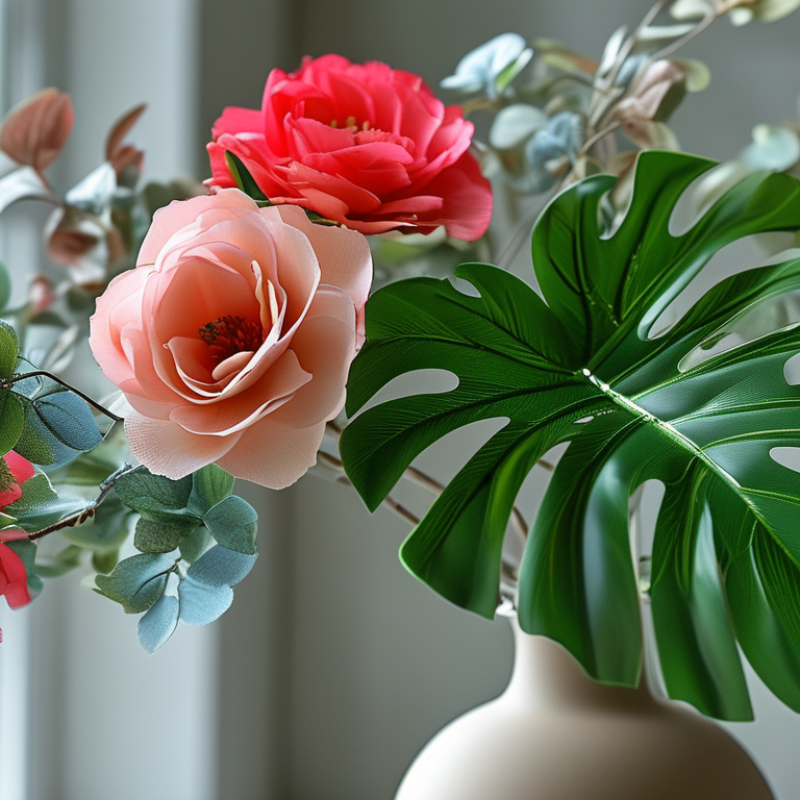
Artificial flowers are manufactured replicas of blossoms, while artificial leaves imitate foliage, stems, and natural textures. They may use polyester, polyethylene, PVC, fabric, wire, or molded foam. Flowers usually emphasize color, petal layers, and bloom shape. Leaves depend more on vein lines, edge cuts, surface gloss, and realistic green variation.
The difference becomes clear during inspection. A rose replica may contain layered petals and a visible center. An artificial leaf often has a flexible stem and a raised midrib. Some products combine both, so the boundary is not absolute. Grand View Research estimated the global artificial flowers market at about US$1.77 billion in 2022, with continued growth expected through 2030. This demand reflects long-lasting decoration, low maintenance, and indoor use. Yet, market reports often group artificial leaves with broader decorative plant categories, which makes leaf-specific comparisons less precise.
Professional buyers should check color consistency, seam quality, wire strength, and surface dust resistance. Hold the stem under bright light. Cheap coatings can look overly glossy. That detail matters. In practical interiors, flowers create focal points, while leaves add volume and visual balance. Data from IMARC’s artificial flowers market analysis also identifies homes, offices, hospitality spaces, and events as important application areas. However, durability claims need careful testing. A sample may survive gentle handling but fade near a sunny window. This is where product specifications alone can mislead.
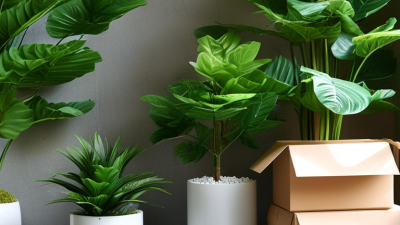
Artificial flowers usually imitate blossoms with layered petals, curved edges, and a clear central focal point. Their shapes often appear fuller and more sculptural than natural blooms. Petals may be molded from fabric, foam, or soft synthetic materials. Some have gentle creases, while others look almost perfectly open. That perfection can feel attractive, but also slightly unnatural.
Artificial leaves follow a different visual language. They are generally flatter, broader, and shaped around a central vein. Designers often add fine vein lines, uneven edges, and subtle bends to create a more believable surface. Leaf textures may feel waxy, matte, leathery, or slightly ribbed. Flowers usually invite attention through color and volume. Leaves support the arrangement through rhythm, contrast, and movement.
The design purpose also changes their construction. A flower may use several petal layers and a reinforced stem to hold its form. A leaf often uses a thin wire inside, allowing the blade to bend toward light. In my experience, realistic leaves need irregular spacing more than flawless symmetry. Yet this rule is not absolute. Some decorative displays deliberately use smooth, identical leaves for a cleaner appearance. I still find overly perfect surfaces less convincing under direct indoor lighting. Small details matter, especially where petals meet stems or veins fade near the edges.
Comparison of typical visual and tactile design characteristics
Artificial flowers usually emphasize layered petals, radial symmetry, soft surface variation, and strong color contrast. Artificial leaves generally focus on broad silhouettes, visible veins, flexible edges, and more uniform green tones. The 1–10 scores represent comparative design intensity rather than market-share or brand data.
Artificial flowers and leaves often look similar from a distance, but their materials serve different purposes. Flowers need softness, layered shapes, and color depth. Polyester fabric is common because it accepts detailed printing and holds curved petals well. Silk-like fabrics create a gentler surface, while polyurethane foam can produce light, flexible blooms. Some makers add latex for realistic bends and slightly firm edges. I have found that fabric petals usually look more natural under indoor lighting, although cheap fabric can appear flat.
Leaves require stronger structure and clearer surface texture. Polyethylene and polypropylene are widely used because they resist moisture and keep their shape. Thin plastic sheets can form sharp veins, while molded polyurethane gives leaves a softer, more natural bend. Many artificial leaves contain a metal wire inside the stem or along the central vein. This wire allows careful positioning but may rust if the coating becomes damaged. That detail is easy to overlook.
Texture matters more than material names alone. A good leaf should show raised veins, varied green tones, and a slight difference between its upper and lower surfaces. Flowers benefit from layered edges and subtle color changes near the center. In my experience, touching the surface reveals quality quickly. It should not feel excessively slippery or brittle. Still, this test is imperfect. Some durable plastics feel plain, yet they perform better in humid rooms than delicate fabric petals.
Artificial flowers and leaves create different decorative effects, even when made from similar materials. Flowers attract attention through color, shape, and seasonal meaning. They work well in dining arrangements, entryway vases, and small table displays. Leaves provide structure, movement, and visual calm. Their green tones can soften shelves, office corners, and narrow spaces without dominating the room.
In my own styling experience, leaves are easier to use repeatedly. A few stems can frame a mirror or fill an empty ceramic container. Flowers usually need stronger balance. Too many bright blooms may make a room feel crowded. However, realistic flowers can add warmth where living plants would struggle. Dark rooms, dry climates, and busy households may benefit from their consistent appearance. The difference is not absolute. Some artificial leaves look flat, while certain flowers appear surprisingly natural.
Tips: Check the stem quality and surface texture before buying. Dust leaves gently with a soft cloth. Place flowers near natural light, but avoid strong sunlight that may fade their colors. Mix different leaf sizes for depth. I sometimes use more foliage than expected. It looks better after stepping back. Also, do not match every color perfectly. A small contrast often feels more believable.
| Comparison Dimension | Artificial Flowers | Artificial Leaves |
|---|---|---|
| Primary decorative role | Create focal points, color accents, and seasonal displays. | Provide visual volume, greenery, texture, and a natural background. |
| Typical materials | Usually polyester, plastic, foam, paper, fabric, wire, or combinations of these materials. | Usually plastic, polyester, fabric, latex, paper, wire, or molded synthetic materials. |
| Visual emphasis | Emphasizes petals, flower heads, color contrast, and recognizable blooms. | Emphasizes foliage shape, branching form, layered greenery, and surface texture. |
| Color range | Broad range, including white, pink, red, yellow, purple, blue, and mixed tones. | Most commonly green, with variations such as dark green, light green, olive, silver, and variegated patterns. |
| Best use in arrangements | Used as the centerpiece, bouquet highlight, table accent, wreath feature, or event decoration. | Used as filler, framing foliage, garland material, wall greenery, or a base for larger arrangements. |
| Space required | Often requires moderate space because flower heads can project outward from the arrangement. | Can efficiently fill narrow or wide spaces, depending on leaf size and stem length. |
| Maintenance | Does not need watering or pruning; delicate petals may require careful dusting. | Does not need watering or pruning; broad leaves are generally easy to wipe or dust. |
| Durability considerations | Petals and fine details may bend, flatten, or fade when exposed to friction, heat, or sunlight. | Leaves are often structurally more resistant to handling, although prolonged sunlight can cause fading or brittleness. |
| Suitable environments | Homes, offices, retail displays, weddings, parties, hospitality spaces, and seasonal decorations. | Homes, offices, vertical displays, reception areas, restaurants, retail settings, and long-term interior greenery. |
| Outdoor suitability | Suitable outdoors only when the material is specifically rated for outdoor exposure; otherwise fading and weather damage may occur. | Suitable outdoors only when made with weather-resistant materials and protected from prolonged ultraviolet exposure. |
| Scent and sensory effect | Usually has no natural fragrance unless a separate scent product is added. | Usually has no natural fragrance and mainly contributes visual texture rather than scent. |
| Arrangement flexibility | Best for adding a clear focal point and controlled color distribution. | Best for adjusting fullness, height, coverage, and visual balance around flowers or other objects. |
| Most effective combination | Use flowers to attract attention and communicate a decorative theme. | Use leaves to support the flowers, soften empty areas, and create a fuller, more natural-looking composition. |
Note: Performance varies according to material quality, construction, finishing, and exposure to sunlight, moisture, heat, and frequent handling.
Choosing artificial flowers or leaves depends on the atmosphere you want to create. Flowers provide color, focal points, and seasonal character. Leaves create structure, softness, and a calmer appearance. I often use leaves in narrow hallways because they look natural without competing with nearby artwork. Flowers work better on dining tables, reception desks, and empty corners.
The Artificial Flowers Market Report by Grand View Research estimated the global market at about USD 1.95 billion in 2022. It also projected steady growth through 2030. This demand reflects practical decorating needs, including lower maintenance and longer visual consistency. For a realistic display, check the stem flexibility, surface texture, and color variation. Glossy leaves can look artificial under strong lights. Matte finishes usually appear more convincing. My own mistake was choosing large blooms for a small shelf. The arrangement felt crowded.
Tips: Measure the space before shopping. Use leaves for height and volume. Add flowers for contrast. In sunny rooms, select UV-resistant materials. For kitchens, choose washable surfaces because dust and grease collect quickly.
A professional cleaning guide from the International Facility Management Association emphasizes routine dust control in shared interiors. That advice matters here. Even high-quality artificial plants look neglected when their edges turn gray. Also, avoid matching every piece perfectly. Natural arrangements are slightly uneven, and that small imperfection often makes the display feel more believable.