How to Choose the Best Artificial Rose for Your Business?
Choosing the best Artificial Rose for your business requires more than selecting the most attractive color. A showroom buyer must examine the flower closely. Look at the petal edges, center construction, stem strength, and leaf attachment. Does the bloom remain convincing under bright retail lighting? Can it survive repeated handling during events, photography, and delivery? These details affect customer trust and replacement costs.
Paper-flower artist and floral educator Livia Cetti offers a useful principle: “Choose the bloom that holds its character up close.” That advice fits commercial Artificial Rose buying. A rose may look beautiful online, yet appear plastic beside a real vase. Request physical samples before placing a larger order. Compare texture, fragrance-free materials, color consistency, packaging, minimum order quantities, and delivery times. Ask whether the product is suitable for indoor displays or protected outdoor use. UV resistance matters near shop windows.
Think beyond appearance.
A reliable supplier should provide clear specifications and consistent communication. Check stem wire quality, petal recovery after compression, and the supplier’s policy for damaged cartons. Calculate the full cost, including freight, storage, rejected pieces, and seasonal replacement. A low unit price can become expensive when ten percent of the shipment looks uneven. This happens more often than buyers expect. I would also test one arrangement for thirty days and record fading, dust retention, and customer reactions. The test may expose weaknesses that photographs hide. No selection is perfect. The goal is a dependable Artificial Rose that matches your brand, budget, and daily operating conditions.
Business Needs and Artificial Rose Selection Criteria
Choosing the best artificial rose starts with business needs, not color preferences. A wedding venue needs realistic petals, secure stems, and dependable delivery. A hotel may prioritize UV resistance, washable surfaces, and long-term visual consistency. A retailer needs attractive packaging, manageable minimum orders, and low return risk. The right rose depends on its working environment.
Fortune Business Insights estimates the global artificial flowers market will grow from about USD 2 billion in 2024 to more than USD 3 billion by 2032. Grand View Research also predicts steady market growth, although its figures differ because research methods and product categories vary. This disagreement matters. Treat forecasts as direction, not guaranteed sales. Check local demand before purchasing heavily.
Material quality should be tested under realistic conditions.
Bend several stems, inspect loose petals, and place samples under bright window light. Polyester can offer consistent color, while latex-like finishes may create softer texture. Ask suppliers for cleaning guidance, colorfastness information, packaging details, and safety documentation. A lower unit price can become expensive after damaged deliveries or frequent replacement.
My own buying mistake was judging a rose under showroom lighting. It looked convincing there, but its leaves appeared too glossy beside natural greenery. Request samples in your actual display area. Measure vase height, customer viewing distance, cleaning frequency, and storage space. Small details often decide whether an artificial rose supports your business or quietly weakens its presentation.
Types of Artificial Roses and Their Key Differences
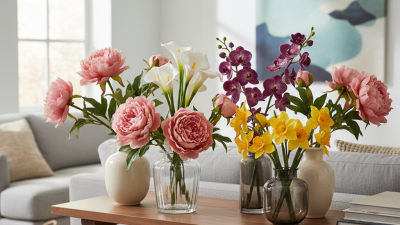
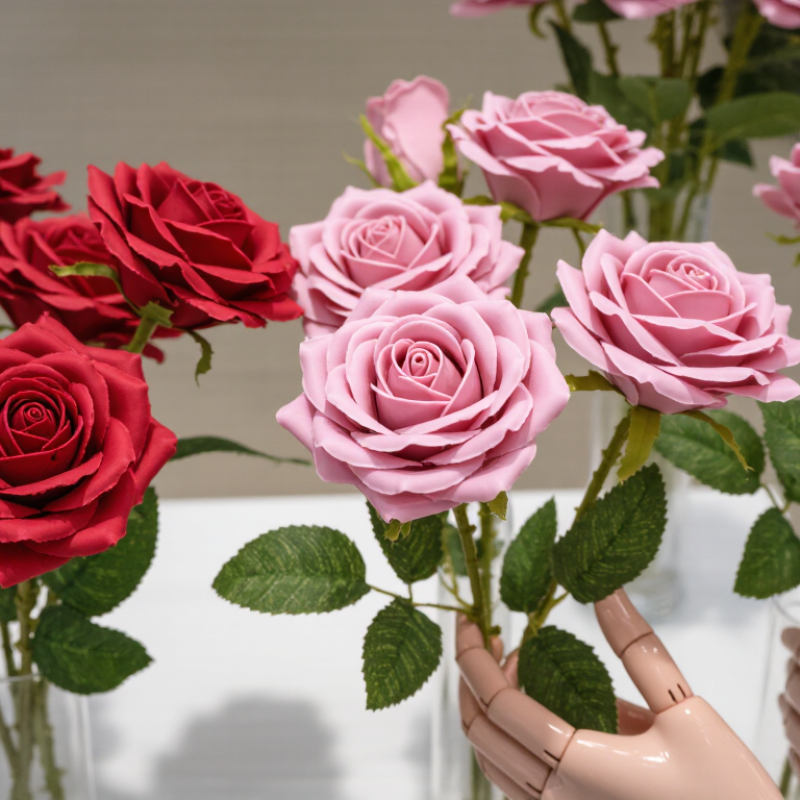
When choosing artificial roses for a business, compare materials before comparing colors. Polyester or “silk” roses are lightweight, affordable, and widely available. Their petals usually have a soft fabric feel, but edges may look slightly flat. Latex-coated roses offer more realistic texture and gentle petal movement. They suit wedding displays, hotel lobbies, and premium retail windows. Polyurethane foam roses feel softer and hold their shape well, though some varieties can appear overly smooth.
Durability also separates these types. Plastic or PE roses resist moisture and frequent handling, making them useful for outdoor signs or busy events. However, direct sunlight can fade cheaper pigments. Grand View Research estimated the global artificial flowers market at about US$1.2 billion in 2022, with continued growth expected through 2030. Its analysis reflects rising demand for low-maintenance décor, but market estimates vary by definition and region. That uncertainty matters. A low-cost rose may reduce purchasing expenses, yet replacement costs can quietly rise.
Tips: Touch the petals under bright light. Check the stem wire, leaf attachment, and color consistency. For outdoor use, request UV-resistance test information. For premium displays, mix latex roses with a few fabric roses to reduce visual uniformity. Keep a sample for one month before ordering in bulk. Real experience often reveals problems that product photos hide.
How to Evaluate Quality, Materials, and Realistic Appearance
Choosing the best artificial rose starts with inspecting quality, materials, and realistic appearance. For business use, touch every sample before placing a bulk order. I check whether the stem bends naturally, holds its shape, and contains a firm internal wire. Loose petals, visible glue, and uneven leaves often reveal rushed production. Real flowers are imperfect. A convincing artificial rose should be imperfect too.
Material affects both appearance and service life. Polyester petals usually provide stable color and clean edges. Latex-coated petals can feel softer, but they may change texture under heat or sunlight. Ask suppliers for material details, care instructions, and sample pieces from different production batches. Smell the sample. A strong chemical odor is a warning sign. Then test the rose near a window and under indoor lighting. Artificial light can hide dull colors and harsh seams.
Realism depends on small details. Look for gentle color gradients, natural petal veins, a shaped calyx, and a stem that is not perfectly straight. I once approved roses that looked excellent in product photos. Their petals appeared too glossy in a hotel lobby. That mistake taught me to inspect samples in the final selling environment. Request close-up images, measure bloom diameter, and compare several units side by side. A single attractive sample proves little. Consistent quality matters more for customer trust. Still, the most realistic rose may not be the best choice if its coating scratches during ordinary handling.
Matching Rose Designs with Customers, Spaces, and Brand Identity
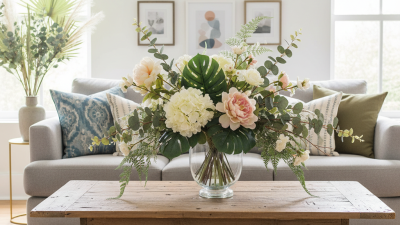
Choosing the best artificial rose starts with the customer, not the stem. A luxury hotel may need large ivory roses with soft, natural gradients. A café often suits smaller blush arrangements that feel warm, but not overly formal. Retail displays need stronger colors and cleaner shapes. I have seen realistic roses fail when their scale clashes with the room. The flowers looked beautiful, yet the arrangement felt crowded.
Space and brand identity should guide texture, color, and vase height. Matte petals support calm, minimalist interiors. Velvet-like petals create a richer impression, but they can collect dust visibly. Grand View Research’s 2024 artificial flowers report projects a 5.9% market CAGR from 2024 to 2030. IMARC Group also reports continued growth through demand for durable decorative products. These figures suggest opportunity, but they do not replace testing with real customers.
Tips: Place three samples in the actual space. Check them under daylight and warm lighting. Ask whether the rose feels welcoming, premium, or artificial. Record customer reactions. Small changes matter.
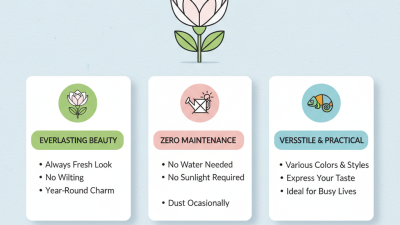
Match the design to buying habits, too. Gift shoppers may prefer compact, romantic bunches with gentle color variation. Event planners often value repeatable sizes and dependable availability. For offices, low-pollen, dust-resistant arrangements can support easier maintenance. However, “maintenance-free” is an imperfect promise. Artificial roses still need regular cleaning. A slightly uneven petal can look more convincing than perfect symmetry. That detail may be the difference between decoration and believable atmosphere.
How to Choose the Best Artificial Rose for Your Business?
Matching rose designs with customers, spaces, and brand identity
The chart uses a 0–100 planning benchmark to compare how well common artificial rose styles fit different commercial settings.
Compact natural-looking roses suit intimate spaces, large statement roses create visual impact in spacious venues, monochrome roses support refined visual identities, and mixed bouquets offer flexibility for seasonal displays.
Budget, Maintenance, Suppliers, and Final Purchase Decisions
Choosing an artificial rose for business starts with the budget, but price alone can mislead. In retail displays, I have seen cheap petals fade quickly under window light. A lower purchase price then becomes a replacement expense. Calculate monthly cost, including delivery, storage, cleaning, and replacement needs. Compare stem quality, petal density, color stability, and vase compatibility. Request samples before ordering hundreds. Touch matters.
Maintenance should fit your staff’s routine. Dust collects between layered petals and looks obvious under bright lighting. Choose washable materials when possible, especially for restaurants, salons, and reception areas. A soft brush, cool water, and gentle drying usually protect the shape. Avoid harsh chemicals. Some arrangements need reshaping after transport, so allow labor time. I once underestimated this task. It affected setup speed.
Supplier reliability deserves equal attention. Request material details, size tolerances, product photographs, packaging information, and lead times. Confirm how damaged units are handled before payment. A professional supplier answers specific questions and documents changes clearly. Check whether colors remain consistent across production batches. Your final purchase should match the display purpose, available space, and customer distance. Order a small test quantity first. Review it after two weeks of real use. The result may challenge your original choice, and that is useful evidence.